 seolounge

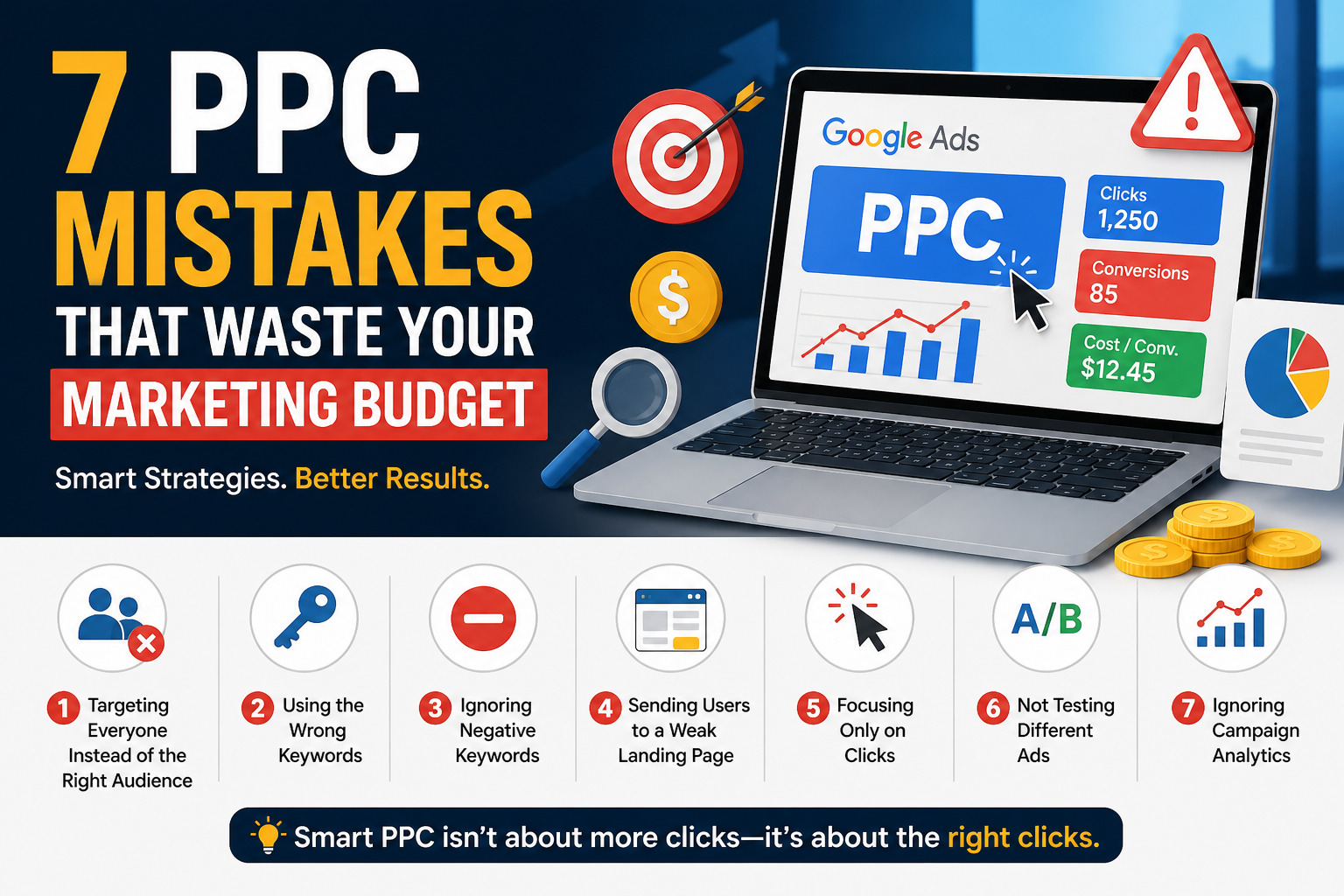
In theory, running PPC campaigns is easy: you make an ad, set a budget, and wait for leads to come in. But in real life, many businesses spend a lot of money on ads but don’t get any real results.
Even small mistakes can quickly eat up your budget when you use Google PPC, social media ads, or full-scale pay-per-click advertising. A lot of brands only care about getting clicks, but clicks don’t always lead to sales.
The truth is that spending more money on PPC marketing isn’t the key to success; it’s spending it wisely.
If your campaigns aren’t getting the results you wanted, one of these mistakes is likely hurting your performance.
1. Targeting Everyone Instead of the Right Audience
Trying to reach everyone is one of the biggest mistakes businesses make when they do pay-per-click advertising.
A wider audience might bring in more traffic, but that doesn’t mean better leads. If your ads are getting clicks from people who aren’t really interested in your services, you’re wasting money on clicks that don’t matter.
For instance, a local business that runs Google PPC ads should focus on targeting people in its area rather than showing ads across the country.
What You Should Do Instead:
- Target users based on where they live, what they like, and how they act
- Make different campaigns for each group of customers.
- Use remarketing to reach people who have already been to your site.
- When picking keywords, think about what the user wants.
- The better your campaign does, the more specific your targeting is.
The more specific your targeting is, the better your campaign performance becomes.
2. Using the Wrong Keywords
Every Google pay-per-click campaign is built on keywords.
Many businesses use very broad keywords in hopes of attracting more visitors. But broad keywords often bring in people who aren’t looking for the services you offer.
If you run a PPC agency and want to show ads for the keyword “marketing,” they might show up for:
- jobs in marketing courses in marketing
- tools for marketing that are free
These clicks cost you more money without bringing in real customers.
Smarter Keyword Strategy:
Use specific keywords instead of broad ones:
- Keywords with a high intent
- Keywords based on where you are
- search terms that are focused on services
Some effective examples:
- google ppc
- pay per click
- ppc marketing
- google click ads
- google ppc ads
These keywords usually attract users who are actively searching for advertising services.
3. Ignoring Negative Keywords
This is one of the most overlooked mistakes in pay-per-click advertising.
If you don’t use negative keywords, your ads might show up for searches that aren’t relevant, which means you waste money on ads.
Think about paying for clicks from people who are looking for:
- free PPC tools, PPC jobs, and tutorials on how to advertise
- It’s not likely that those visitors will become paying customers.
Those visitors are unlikely to become paying customers.
Add Negative Keywords Like:
- free
- jobs
- internship
- tutorial
- DIY
- course
Negative keywords make your Google PPC campaigns more focused and cost-effective.
4. Sending Users to a Weak Landing Page
Even the best Google click ads can fail if the landing page experience is poor.
Many businesses spend thousands on ads but direct users to a generic homepage that doesn’t clearly explain the service or encourage action.
If your landing page is:
- slow,
- confusing,
- cluttered,
- or not mobile-friendly,
People can leave quickly.
A Good Landing Page Should:
- have a clear headline
- load quickly
- quickly explain the offer
- include a strong call to action
- Make sure it works on mobile devices
Your landing page is very important for turning ad clicks into real leads.
5. Focusing Only on Clicks
Getting clicks is exciting, but they don’t always mean success.
A campaign that gets 1,000 clicks but no conversions is not nearly as valuable as one that gets 100 clicks and 20 good leads.
A lot of businesses that run Google PPC ads put too much emphasis on:
Instead of real business goals, they care about
- impressions
- traffic
- click
- numbers
Focus on Metrics That Matter:
- cost per lead
- return on ad spend
- customer acquisition cost
- conversion rate
PPC marketing that works well always focuses on conversions, not just traffic.
6. Not Testing Different Ads
Many brands run the same ad for months without making any changes.
People stop paying attention to ads that are the same over and over again. This is known as “ad fatigue,” and it can greatly lower your click-through rate.
What You Should Try:
- Headlines
- ad copy
- Images
- Videos
- CTA buttons
- Audience segments
To make pay-per-click campaigns work, you have to keep testing and improving them.
Even small changes can make a big difference in performance.
7. Ignoring Campaign Analytics
Businesses lose money on Google Pay-Per-Click campaigns for a lot of reasons, but one of the biggest is not looking at their data carefully.
You need to keep an eye on your PPC campaigns all the time.
You won’t know without analytics:
- Which keywords are costing you money?
- Which ads get people to buy?
- Where are people leaving?
- Which audience does the best?
Important metrics to keep an eye on:
- Click-Through Rate (CTR)
- CPC, or Cost Per Click
- Rate of Bounce, Rate of Conversion, and ROAS (Return on Ad Spend)
A data-driven approach helps businesses make their campaigns work better all the time.
Final Thoughts
It’s not enough to just spend more money on ads to run successful pay-per-click campaigns. It’s important to know who your audience is, pick the right keywords, make your landing pages better, and keep improving your campaigns.
If you run your own PPC campaigns or work with a PPC agency, avoiding these common mistakes can help you get better leads and save money at the same time.
Businesses that use Google PPC, Google click ads, and smart PPC marketing are the ones that are seeing long-term growth and higher returns on their investments.
At the end of the day, smart advertising isn’t about getting more clicks; it’s about getting the right clicks.
