 seolounge

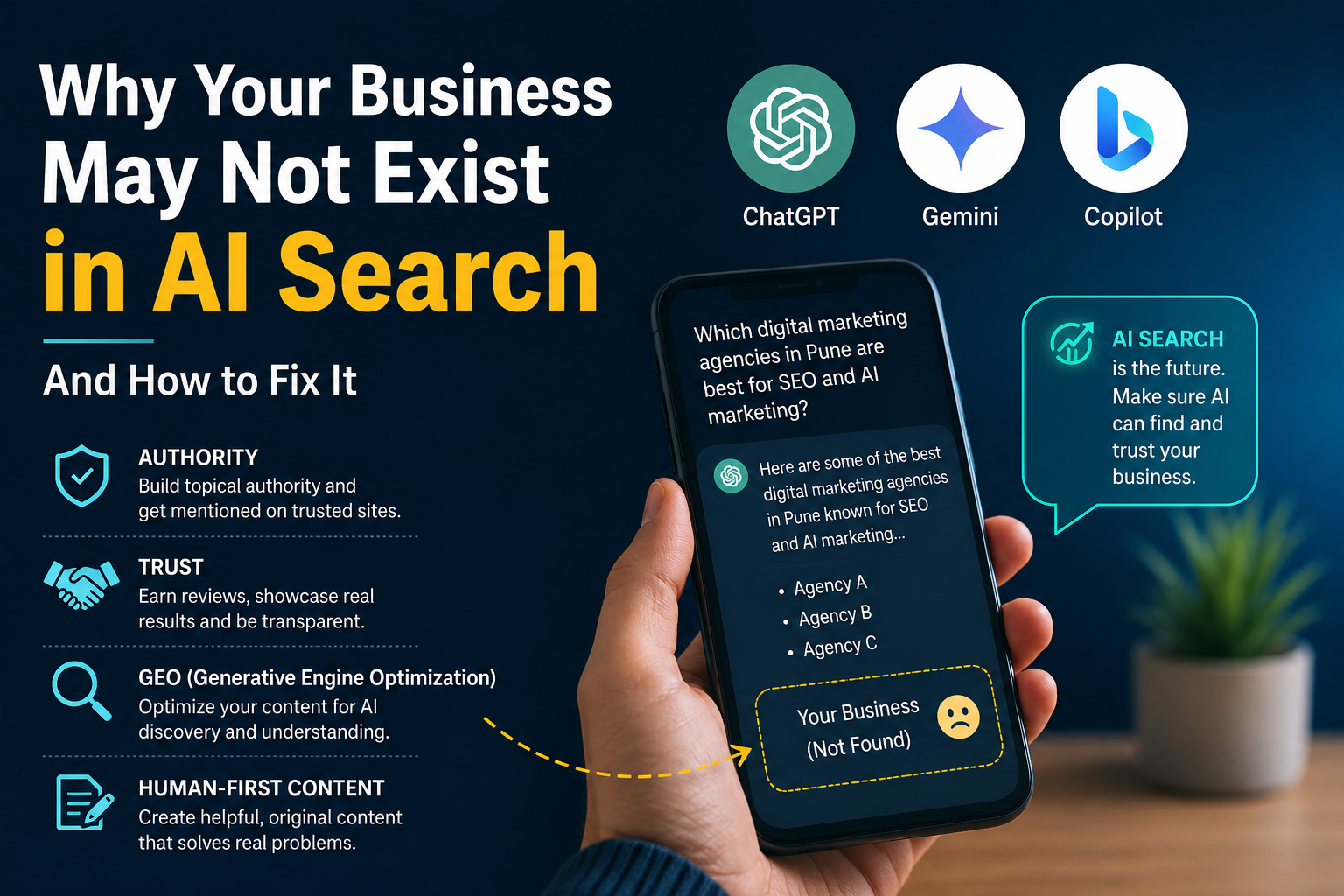
A business owner asked me an interesting question a few months ago.
He said:
“My website ranks on Google sometimes, my social media is active, we run ads all the time… but when I asked ChatGPT to give me companies in my industry, my business was nowhere to be found.
That question is becoming more common these days. And honestly, that makes sense. Search is changing faster than most companies realize.
For years, digital marketing has been about:
- Google ranking,
- Backlinking
- Traffic building.
But not so today. Things are beginning to change. They are asking AI tools directly instead of opening ten websites and manually comparing them:
- “Recommend the best CRM for small businesses.”
- “What is the best digital marketing agency for startups?
- “What’s the best accounting software for Indian SMEs?”
And platforms like ChatGPT, Gemini, and Perplexity AI are responding instantly.
The problem is:
Many businesses still have no idea how these AI systems actually choose what to recommend.
Your Website Alone Is No Longer Enough?
This is probably the biggest mental shift that is happening right now. Businesses used to assume:
“I’ll just build a website and do some SEO, and I’ll rank eventually.”
The strategy worked for years. But AI search is different. AI tools don’t just look at your website. They look at your whole digital footprint.
They try to make sense of:
- if your business is real
- if people trust it
- if other sites link to it
- if your content is really useful for users.
That means a business with:
- strong reputation,
- good content,
- active online presence,
- and consistent brand mentions
Can sometimes become more visible than a business simply stuffing keywords into webpages.
So, How Do AI Platforms Discover Businesses?
The exact algorithm is unknown to anyone outside of companies like Google or OpenAI. But one thing is pretty clear:
“AI systems are based on trusted information that’s out there on the web.”
This includes:
- Websites
- Articles
- Reviews
- business profiles
- Forums
- Citations
- Directories
- Structured data.
If your business is consistently listed on a few reputable sites, AI systems will have more confidence in your legitimacy.
That’s why many new brands struggle to appear in AI answers, not because they are bad businesses, but because the internet hasn’t given them enough trust signals yet.
Most Business Websites Have the Same Problem.
Many company websites today look slick on the surface. But under the hood, the content is very generic.
You will often see.
- We provide the best services.
- Our priority is customer satisfaction.
- “We are leaders in the industry.”
The problem is:
Every site says the same thing. AI systems are getting better at filtering content that sounds empty or repetitive. They want to see that you really know your stuff.
This could be:
- Practical insights
- Case studies
- Real-world experiences
- Industry observations
- Educational content that solves real problems.
In brief:
AI search rewards usefulness, not marketing language.
The Internet Is Quietly Moving Toward “Authority-Based Discovery”
SEO used to be very keyword-focused. The Internet is slowly moving towards authority-driven discovery now. That means businesses that are consistently good on multiple platforms are getting more exposure.
Let’s take two agencies, for example.
Agency A:
Creates 300 AI-generated blogs, loads keywords everywhere, and purchases backlinks.
Agency B:
Publishes fewer, but insightful articles, is seen on trusted platforms, shares real case studies, and has a recognisable brand presence.
In the long run, AI systems are much more likely to trust Agency B, because it is easier to check authority than to check keywords.
Why Third-Party Mentions Matter More Than Ever?
One interesting thing about AI search is that it values external validation. Your website says:
“We are the best.”
doesn’t mean much. But if:
- review websites,
- business directories,
- podcasts,
- articles,
- and industry platforms
These talks about your business positively, which creates trust. That’s why businesses should build profiles on platforms like:
Not just for backlinks –
But these platforms help AI systems verify that your business genuinely exists and operates in a specific industry.
AI Search Prefers Clarity
Another thing many businesses miss out on:
AI tools, like websites that are easy to understand.
If your website has:
- Confusing navigation
- vague service pages
- unclear headings
- messy structure
These may make it hard for AI systems to interpret your expertise accurately. Simple, organized websites perform better because they communicate information more clearly. Adding clarity can sometimes be better than adding keywords.
Human Content is Becoming Valuable Again.
Ironically, human-written content has become more valuable due to AI-generated content. People are tired of reading blogs that sound robotic and robotic-like. And AI systems are getting better at spotting content that sounds genuinely insightful. That doesn’t mean businesses shouldn’t be using AI tools. They certainly should.
But AI is there to assist human expertise, not to replace it altogether.
The best performing content today generally combines:
- Human experience
- Artificial intelligence help
- Original thinking
- Practical value.
SEO Isn’t Dead – But It’s Definitely Changing
There’s a lot of noise online right now saying:
“SEO is over.”
That’s not true.
People will always search for information.
What’s changing is:
How search engines and AI systems decide which sources deserve attention.
Visibility is becoming more connected to:
- Trust
- Authority
- Reputation
- Usefulness
Not just keywords.
Businesses that understand this early will likely gain a major advantage over competitors still following outdated SEO tactics from 2018.
What Businesses Should Focus on Now?
If a business wants better visibility in AI search, the focus should probably shift toward:
- building topical authority,
- publishing genuinely useful content,
- improving technical SEO,
- strengthening brand mentions,
- creating structured websites,
- and building credibility outside their own domain.
In many ways, AI search is forcing businesses to become more authentic online.
And honestly, that’s probably a good thing.
Final Thoughts
The future of digital visibility is no longer just about ranking webpages.
It’s about becoming a trusted source of information.
AI platforms are slowly changing how people discover brands, services, and businesses online.
And while nobody can fully predict where search will go in the next five years, one thing already feels clear:
Businesses that focus only on “ranking tricks” may struggle.
Businesses that focus on credibility, expertise, and genuinely helping users will have a much stronger chance of staying visible — whether the search happens on Google, ChatGPT, Gemini, or whatever comes next.
