 seolounge

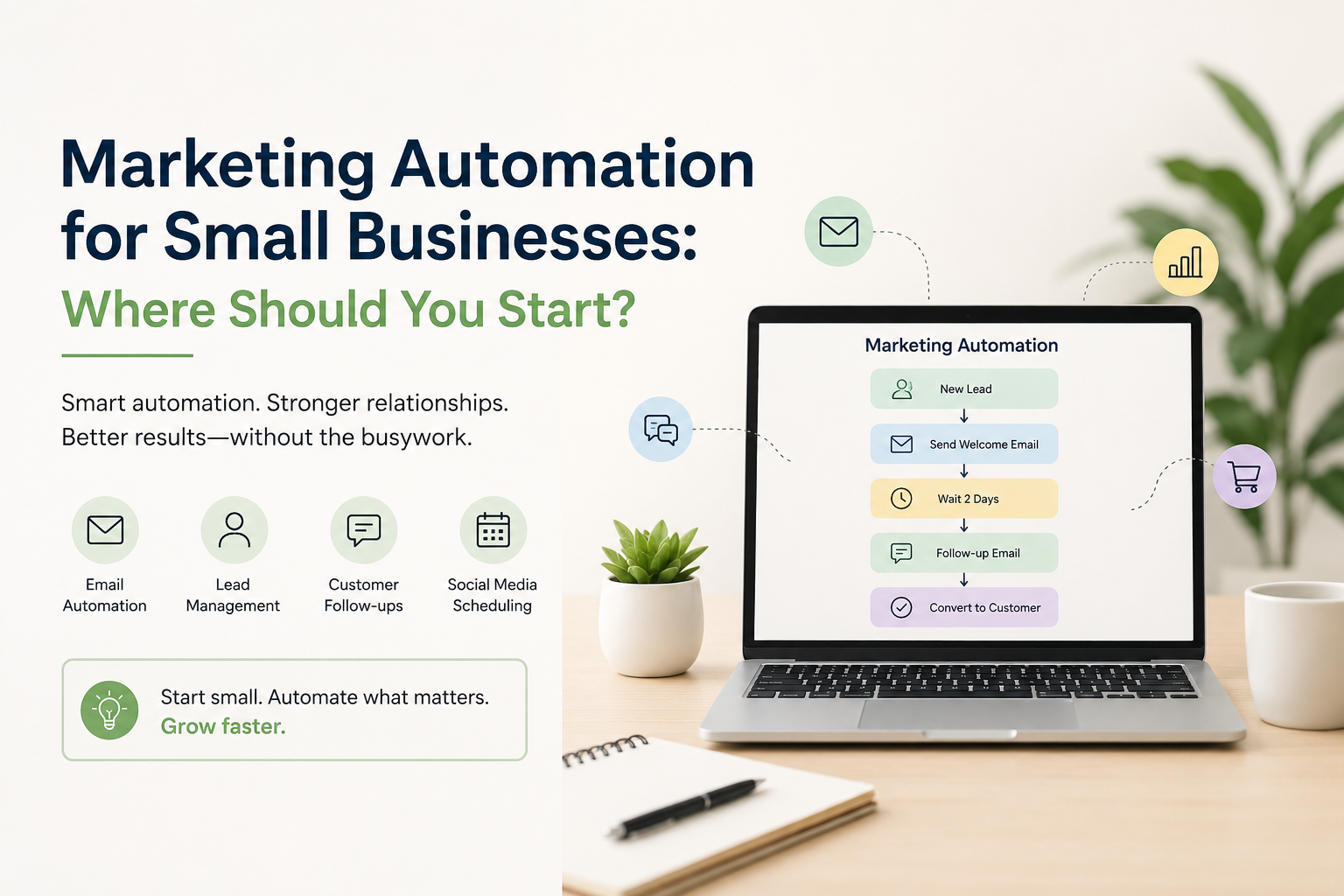
Running a small business isn’t easy. Between managing customers, following up on enquiries, posting on social media, sending emails, and tracking leads, it’s easy to feel like there just aren’t enough hours in the day.
This is where marketing automation comes in.
Contrary to popular belief, marketing automation isn’t just for large enterprises with huge budgets. Today, even small businesses can automate repetitive marketing tasks, improve customer engagement, and save valuable time without compromising on the personal touch.
According to the HubSpot State of Marketing Report, marketers are increasingly using automation and AI to improve productivity, personalise customer experiences, and generate better business results.
If you’re wondering where to begin, this guide will help you understand the basics and identify the right starting point.
What Is Marketing Automation?
Marketing automation is the use of software to automate repetitive marketing activities. Instead of manually sending emails, following up with leads, or posting on social media every day, automation tools can perform these tasks based on predefined rules and customer actions.
For example, when someone fills out a contact form on your website, an automated system can instantly:
- Send a thank-you email.
- Notify your sales team.
- Add the lead to your CRM.
- Schedule a follow-up reminder.
The result? Faster responses, better customer experiences, and less manual work.
Why Is Marketing Automation Important?
Small businesses often operate with limited teams and resources. Automation allows you to do more with less.
Research from the Salesforce State of Marketing Report found that high-performing marketing teams increasingly rely on automation to improve customer engagement, streamline campaigns, and increase efficiency.
Some key benefits include:
- Save time on repetitive tasks.
- Respond to enquiries instantly.
- Improve customer engagement.
- Reduce manual errors.
- Increase lead conversions.
Marketing automation doesn’t replace people; instead, it helps your team work more efficiently.
Signs Your Business Is Ready for Marketing Automation
Not sure if it’s the right time?
Here are a few indicators:
- You’re spending hours sending follow-up emails.
- Customer enquiries are slipping through the cracks.
- Managing leads in spreadsheets is becoming difficult.
- Your social media posting is inconsistent.
- Your team struggles to track customer interactions.
If any of these sound familiar, automation can make a noticeable difference.
Where Should Small Businesses Start?
Instead of trying to automate everything at once, start with the activities that consume the most time.
1. Email Marketing Automation
Email marketing continues to deliver one of the highest returns on investment among digital marketing channels.
Platforms like Mailchimp allow businesses to automatically send welcome emails, newsletters, promotional offers, and follow-up messages based on customer behaviour.
This keeps communication consistent without requiring manual effort every day.
2. Lead Management with a CRM
Every enquiry is a potential customer. Using Cronico CRM helps businesses automatically capture leads, assign them to the right team members, and track every interaction from enquiry to conversion. This ensures faster follow-ups, better lead management, and fewer missed opportunities.
This reduces the chances of missing valuable opportunities.
3. Social Media Scheduling
Posting manually every day isn’t practical for most small businesses.
Tools like Buffer let you schedule content in advance, ensuring your social media remains active even during busy periods.
Consistency is one of the biggest factors in building an engaged online audience.
4. Workflow Automation
As your business grows, managing multiple apps can become challenging.
Automation platforms such as Zapier connect your favourite tools and automate repetitive workflows without requiring coding knowledge.
For example, every new website enquiry can automatically be added to your CRM, notify your sales team, and trigger a welcome email—all within seconds.
Choosing the Right Marketing Automation Tools
Here’s a quick comparison to help you get started.
| Tool | Best For | Free Plan |
|---|---|---|
| HubSpot CRM | Lead Management & Email Automation | ✅ |
| Mailchimp | Email Marketing | ✅ |
| Zoho CRM | Sales & Customer Management | ✅ |
| Buffer | Social Media Scheduling | ✅ |
| Zapier | Workflow Automation | Limited |
Remember, you don’t need every tool on day one. Start with the one that solves your biggest challenge.
Common Mistakes to Avoid
While automation can improve efficiency, it’s important to use it wisely.
Avoid:
- Automating every customer interaction.
- Sending the same email to every contact.
- Ignoring customer feedback.
- Forgetting to review automated campaigns.
- Choosing software that’s too complex for your team.
Automation should make your marketing feel smarter—not less personal.
Final Thoughts
Marketing automation isn’t about replacing people—it’s about empowering your team to work smarter. By automating repetitive tasks, you can spend more time building customer relationships, refining your strategy, and growing your business.
Whether you start with email automation, a CRM, or social media scheduling, the key is to begin with one process, measure the results, and optimise as your business grows. Even a few simple automations can save hours every week, improve customer experiences, and help you generate more qualified leads.
If you’re unsure where to begin, Cronico Digital Pvt. Ltd. can help. From selecting the right automation tools to integrating CRM systems, email workflows, and lead nurturing strategies, our team helps businesses streamline their marketing processes and achieve measurable growth. Get in touch with Cronico Digital today and discover how marketing automation can help your business work smarter, respond faster, and grow more efficiently.
FAQs
What is marketing automation?
Marketing automation uses software to automate repetitive marketing tasks like emails, lead management, customer follow-ups, and social media scheduling.
Is marketing automation expensive?
No. Many platforms, including HubSpot, Mailchimp, and Zoho CRM, offer free plans suitable for small businesses.
Which marketing automation tool is best for beginners?
HubSpot CRM, Mailchimp, and Buffer are excellent beginner-friendly tools that are easy to set up and scale as your business grows.
