 seolounge

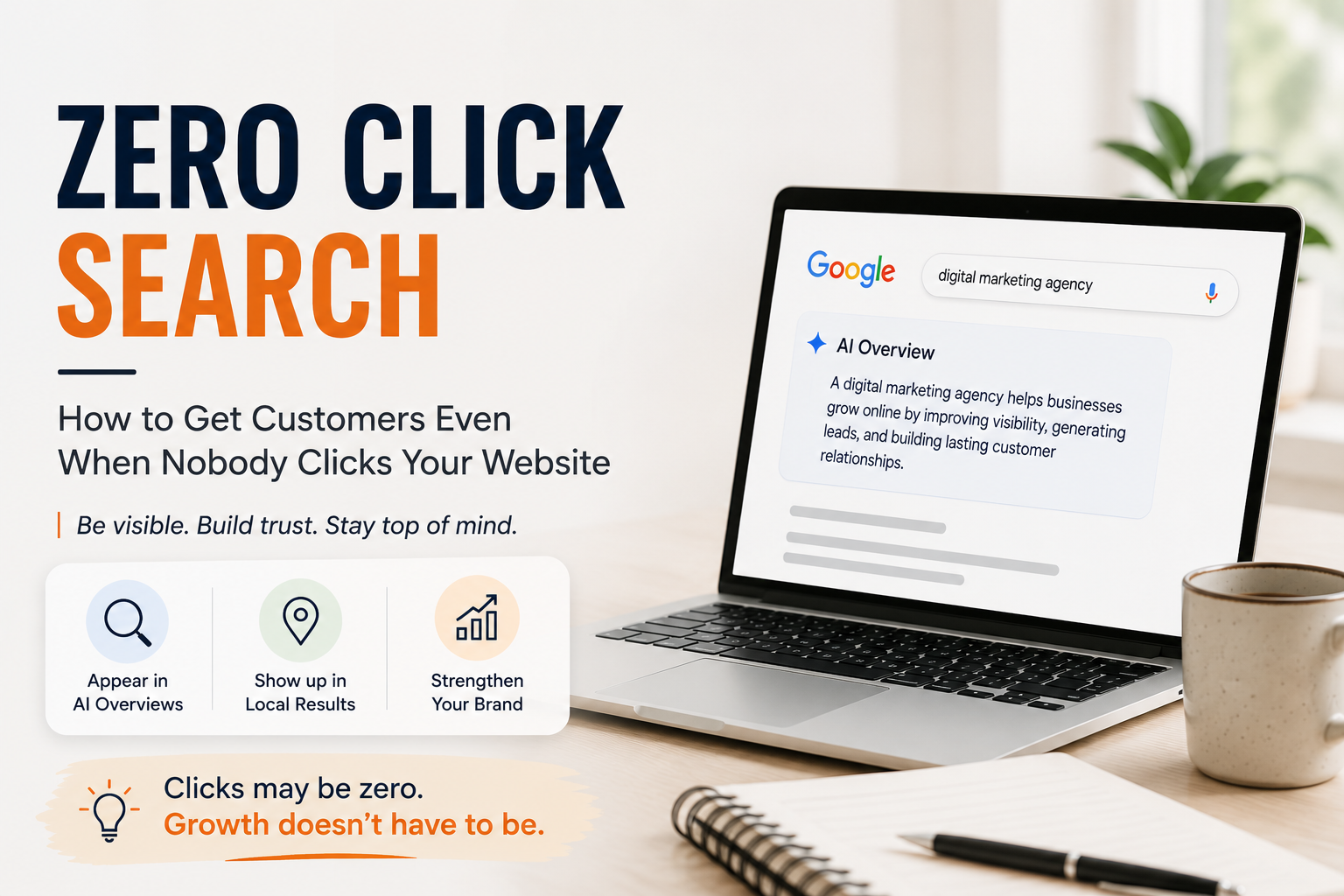
If you’ve been monitoring your website traffic lately, you may have noticed something unusual. Your content is ranking well on Google, impressions are increasing, yet your website clicks aren’t growing at the same pace. Sound familiar? You’re not alone. The way people search online is changing rapidly. Today, Google often answers users’ questions directly on the search results page through AI Overviews, Featured Snippets, Knowledge Panels, Local Packs, and “People Also Ask” sections. In many cases, users get the information they need without ever visiting a website. This phenomenon is known as Zero Click Search, and it’s transforming how businesses approach digital marketing. For many business owners, this may seem like bad news. After all, if users aren’t clicking through to your website, how will they become customers? The answer lies in changing the way we measure online success. Instead of focusing only on clicks, businesses should start thinking about visibility, authority, and trust. When your brand consistently appears in Google Zero Click Search experiences, you stay top of mind—even if the first interaction doesn’t result in an immediate website visit.
In this blog, we’ll explain the meaning of zero-click searches, why zero-click search results are becoming more common, and how businesses can still generate leads in this evolving search landscape.
What Is Zero-Click Search?
Let’s begin with the basics.
Zero Click Search refers to a search where Google provides the answer directly on the search engine results page (SERP), eliminating the need for users to click on another website. These zero-click search results can appear in several forms, including:
- AI Overviews
- Featured Snippets
- Knowledge Panels
- Local Business Listings
- Google Maps
- Weather Cards
- Sports Scores
- Currency Converters
- “People Also Ask” boxes
For example, if you search: “What is SEO?”, Google may generate an AI summary explaining SEO before you even reach any website links. Similarly, searching for: “Best digital marketing agency near me” Often displays a Google Maps listing with reviews, business hours, contact details, and directions—allowing users to decide without visiting a company’s website. This is one of the most common examples of Google Zero-Click Search in action.
Why Are Zero-Click Searches Increasing?
The primary goal of Google has always been to provide users with the fastest and most relevant answers possible. With the introduction of AI-powered search experiences, users can now find information in seconds without leaving the search results page. According to SparkToro’s Zero-Click Search Study, a significant percentage of Google searches now end without a website click, especially on mobile devices. Similarly, Google’s AI-powered search experiences continue to prioritize concise, trustworthy, and well-structured information. This doesn’t mean SEO is disappearing. It means SEO is evolving. Instead of competing only for website clicks, businesses now compete for visibility within AI-generated answers and featured search experiences.
Traditional SEO vs Zero-Click Search
| Traditional SEO | Zero Click Search |
| Focuses on ranking pages | Focuses on earning visibility |
| Measures clicks | Measures brand exposure |
| Targets website visits | Targets trust and authority |
| Optimizes pages | Optimizes answers |
| Rankings are the goal | Being referenced is the goal |
The businesses that adapt to this shift early will have a stronger advantage as AI-powered search becomes more common.
Does Zero Click Search Mean SEO Is Dead?
Absolutely not. This is perhaps the biggest misconception surrounding zero-click search. While some informational searches may never generate a website click, users rarely make purchasing decisions based on a single search. Think about your own behaviour. You might first search: “What is Conversion Rate Optimization?” Google provides the answer. A few days later, when you’re ready to hire an agency, you search: “Best CRO Agency in Pune.” At this stage, you’re no longer looking for information—you already trust the brands you’ve seen repeatedly. This is why brand visibility matters more than ever. Being present in zero-click search results builds familiarity, and familiarity often leads to future enquiries.
Why Businesses Should Care About Zero-Click Traffic?
Many marketers worry that zero-click traffic means fewer website visitors. While direct clicks may decrease for some informational queries, businesses can still benefit by appearing where users are searching. Think of zero-click traffic as digital brand awareness. Every time your business appears in AI Overviews, Featured Snippets, or Local Packs, you’re reinforcing your expertise—even if the user doesn’t click immediately. Over time, this repeated visibility can increase branded searches, direct website visits, and customer trust. In fact, many users first discover a business through a zero-click result and return later when they’re ready to make a purchase. The rise of Google Zero Click Search doesn’t mean businesses should stop investing in SEO. Instead, it means your SEO strategy needs to evolve. Here are some practical ways to improve your visibility in zero-click search results and increase the chances of your business being featured by Google and AI-powered search engines.
1. Answer Questions Clearly
Google prefers content that answers users’ questions quickly and accurately. Instead of writing long, complicated paragraphs, use:
- Clear headings (H2 & H3)
- Short paragraphs
- Bullet points
- FAQs
- Numbered lists
For example, instead of writing: “SEO is a digital marketing strategy that involves numerous activities designed to improve search engine rankings…” Try: SEO helps businesses improve their visibility on search engines like Google by optimizing websites and content. Simple, direct answers are more likely to appear in zero – click search results.
2. Build Topical Authority
Publishing one blog isn’t enough. Google and AI-powered search engines prefer websites that consistently publish valuable content around a particular topic. For example, if you’re a digital marketing agency, your blog should cover related topics such as:
- SEO
- Google Ads
- Website Development
- Conversion Rate Optimisation (CRO)
- Local SEO
- AI Marketing
- Content Marketing
This tells search engines that your website is a reliable source of information.
👉 Related Read:
“The Psychology Behind High-Converting Websites: What Makes Visitors Click, Trust, and Convert.” Understanding user behaviour and website psychology can significantly improve conversions once visitors arrive on your website.
3. Optimize Your Google Business Profile
For local businesses, your Google Business Profile is just as important as your website. When users search for: Digital Marketing Agency Near Me. Google often displays Maps results before traditional organic listings. Keeping your profile updated with:
- Business information
- Customer reviews
- Photos
- Services
- FAQs
This can increase your visibility in Google Zero-Click Search.
4. Use Structured Data (Schema Markup)
Schema Markup helps search engines better understand your content. It can improve your chances of appearing in:
- FAQs
- Product snippets
- Review snippets
- Local listings
- AI-generated answers
Although structured data doesn’t guarantee a featured position, it gives search engines additional context about your content. Google provides official guidance on structured data through Google Search Central:
5. Focus on Brand Authority
In 2026, Google doesn’t just rank websites – it evaluates brands. Businesses that consistently publish helpful content, earn quality reviews, and demonstrate expertise are more likely to appear in AI-generated answers. As discussed in our blog:
👉 “Why Brand Authority Matters More Than Backlinks in 2026″
Building trust is becoming just as important as building backlinks.
What About Zero-Click Ads?
You may have come across the term Zero Click Ads. While Google doesn’t officially use this phrase, it generally refers to advertising experiences where users interact directly within Google’s ecosystem without visiting a website.
Examples include:
- Call Ads
- Google Maps Ads
- Local Service Ads
- Click-to-Call Ads
- Lead Form Extensions
In these cases, users may call a business, request directions, or submit a lead form directly from Google. The goal isn’t necessarily website traffic—it’s generating qualified leads as efficiently as possible.
Common Mistakes Businesses Make.
Many businesses still measure success using only website clicks. In reality, modern search performance depends on several other metrics.
Avoid these common mistakes:
1.) Chasing rankings instead of solving customer problems.
2.) Publishing content without answering real user questions.
3.) Ignoring AI Overviews and Featured Snippets.
4.) Forgetting to optimize the Google Business Profile.
5.) Measuring SEO success using clicks alone.
6.) Creating content for search engines instead of people.
Traditional SEO vs Modern SEO
| Traditional SEO | Modern SEO (2026) |
| Focus on rankings | Focus on visibility across Google, AI & social platforms |
| Measure clicks | Measure impressions, engagement & conversions |
| Keyword stuffing | Helpful, experience-driven content |
| Backlinks only | Brand authority + content quality + trust |
| Website visits | Brand discovery across multiple channels |
A Real-World Example
Imagine you’re searching for:
“Best CRM for Small Businesses”
Google immediately displays AI-generated recommendations, comparison snippets, reviews, and frequently asked questions. You don’t click on any website initially. However, one brand keeps appearing throughout your research. A few days later, when you’re ready to choose a CRM, you search for that brand directly. That’s the power of Zero Click Search. Even without an immediate website visit, repeated visibility builds trust—and trust influences buying decisions.
Final Thoughts
The rise of Zero Click Search doesn’t mean the end of SEO—it marks the beginning of a more user-focused approach to digital marketing. Today, businesses need to think beyond website clicks and focus on becoming trusted sources of information. By creating high-quality, experience-driven content, optimising for AI-powered search, and building a strong online presence, your brand can remain visible even when users don’t immediately visit your website.
At Cronico Digital Pvt. Ltd., we help businesses adapt to the future of search through SEO, AI Search Optimisation (GEO), Google Ads, website development, and conversion-focused digital marketing strategies. Whether you’re looking to improve your search visibility or generate more qualified leads, our team can help you stay ahead in an ever-changing digital landscape. Ready to future-proof your digital marketing strategy? Get in touch with Cronico Digital today and discover how we can help your business grow in the era of AI-powered search.
Frequently Asked Questions (FAQs)
1. What is Zero Click Search?
Zero Click Search refers to searches where users receive the information they need directly on Google’s search results page without clicking on a website.
2. What are Zero-Click Search Results?
Zero Click Search Results include AI Overviews, Featured Snippets, Knowledge Panels, Local Packs, Maps, and other Google features that answer queries directly.
3. Is Zero Click Search bad for SEO?
Not at all. While it may reduce website clicks for some informational searches, it increases opportunities for businesses to build brand visibility and authority.
4. What is Zero Click Traffic?
Zero Click Traffic refers to user interactions where your business gains visibility in search results without generating a direct website click. This visibility can still lead to branded searches, enquiries, and conversions later.
5. How can businesses optimize for Google Zero Click Search?
Businesses can improve their chances by creating helpful content, answering user questions clearly, using structured data, maintaining an updated Google Business Profile, and building topical authority through consistent publishing.
