 seolounge

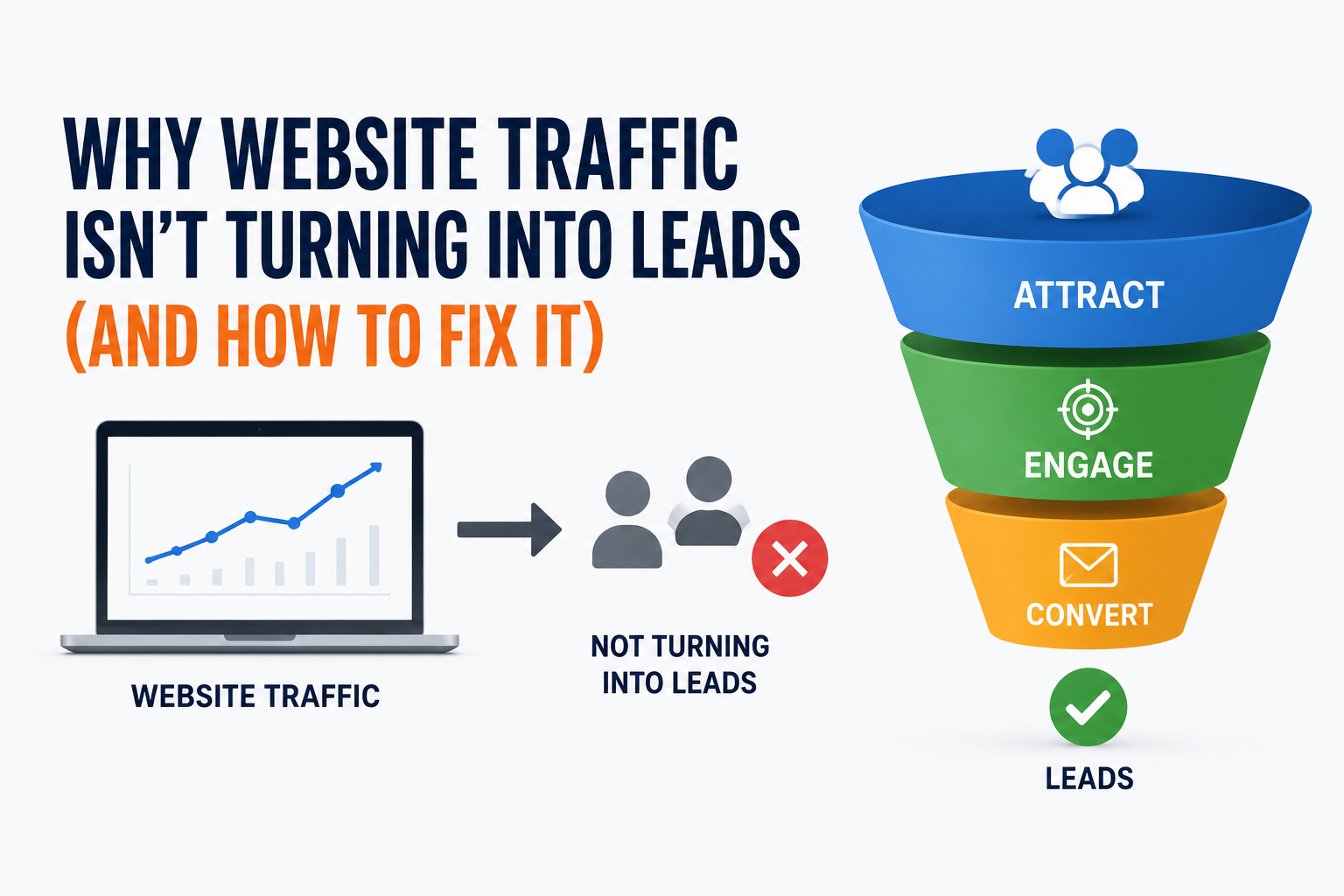
For many businesses, increasing website traffic is a major marketing goal. Whether it’s through SEO, Google Ads, social media, or content marketing, a lot of time and money go into getting more people to visit a website. So, when traffic starts growing, it feels like things are moving in the right direction. But then comes the frustrating part. The enquiries don’t increase. The contact forms remain quiet. Sales calls don’t improve. Despite attracting hundreds or even thousands of visitors, the website fails to generate meaningful business opportunities. If this sounds familiar, you’re not alone. In fact, this is one of the most common challenges businesses face online. The good news is that the problem is usually fixable. More often than not, the issue isn’t traffic – it’s what happens after people arrive on the website.
1. Traffic Quality Matters More Than Traffic Volume
It’s easy to get excited about increasing visitor numbers, but traffic alone doesn’t pay the bills. A website can attract thousands of visitors every month and still struggle to generate leads if those visitors aren’t the right audience. This often happens when businesses focus heavily on informational content but don’t create enough content for people who are actively looking for a solution. For example, someone searching for “what is digital marketing” is likely looking for information. Someone searching for “digital marketing agency for manufacturing companies” is much closer to making a buying decision. Both searches can drive traffic, but only one is likely to generate enquiries. This is why keyword intent matters. A successful SEO strategy doesn’t just focus on rankings; it focuses on attracting people who are most likely to become customers.
2. Unclear Messaging Confuses Visitors
Imagine walking into a store and not being able to figure out what it sells. That’s exactly how many websites feel to first-time visitors. Businesses often use broad marketing phrases like “innovative solutions,” “industry-leading expertise,” or “customer-centric approach.” While these statements sound professional, they don’t clearly explain what the company does or why someone should choose it. When visitors land on a website, they’re usually trying to answer a few simple questions:
- What does this company do?
- Can they solve my problem?
- Why should I trust them?
If those answers aren’t obvious within a few seconds, many visitors leave. Clear messaging doesn’t mean using complicated language. In fact, the opposite is usually true. The simpler the message, the easier it is for potential customers to understand the value being offered.
3. Weak Calls-to-Action Lead to Missed Opportunities
Many websites provide useful information but fail to guide visitors toward the next step. A potential customer might be interested in the service, spend several minutes reading the website, and then leave simply because there was no clear action to take. This is where calls-to-action (CTAs) become important. A strong CTA tells visitors exactly what to do next. Whether it’s requesting a quote, booking a consultation, downloading a brochure, or contacting the team, the action should feel clear and easy. Businesses often underestimate the impact that a small change in CTA wording or placement can have. Something as simple as making a contact button more visible can significantly improve conversion rates.
4. Trust Signals Influence Buying Decisions
People rarely buy from businesses they don’t trust. Even if a visitor is interested in a product or service, they often need reassurance before making contact. That’s why trust-building elements are so important. When evaluating a business online, visitors often look for proof that the company has successfully helped others before. This can include customer testimonials, Google reviews, case studies, certifications, awards, or examples of previous work. Without these trust signals, visitors may hesitate to take the next step. Trust isn’t built through clams alone. It’s built through evidence. The more proof a website provides, the easier it becomes for visitors to feel confident about enquiring.
5. Poor User Experience Creates Friction
A website can have excellent content and strong marketing behind it, but if the user experience is frustrating, conversions will suffer. Modern users expect websites to load quickly, work smoothly on mobile devices, and make information easy to find.
Unfortunately, many websites still struggle with issues such as:
- Slow loading pages
- Confusing navigation
- Outdated layouts
- Difficult mobile experiences
- Long contact forms
Every additional obstacle increases the chances of a visitor leaving without taking action. User experience isn’t just about design. It’s about making the journey from visitor to lead as simple as possible.
6. Data Gaps Make Optimisation Difficult
One of the biggest mistakes businesses make is focusing only on traffic numbers. Knowing how many people visit a website is useful, but it doesn’t explain why visitors aren’t converting. To improve lead generation, businesses need to understand what users are actually doing on the website.
Questions worth exploring include:
- Which pages receive the most engagement?
- Where do visitors leave the website?
- Which CTAs generate clicks?
- How many users reach the contact page?
- Which traffic sources produce the most leads?
Tools such as Google Analytics 4, heatmaps, and session recordings can provide valuable insights into visitor behaviour. Without this data, improving conversions often becomes a guessing game.
7. Slow Follow-Up Can Cost Valuable Leads
Generating a lead is only the first step. What happens after someone submits a form is just as important. Many businesses lose potential customers because follow-up processes are slow or inconsistent. A prospect who doesn’t receive a timely response may contact a competitor instead. Speed matters, especially in competitive industries. Simple improvements such as automated acknowledgements, CRM integrations, and structured follow-up processes can help ensure that enquiries don’t get lost or ignored. A faster response often increases the likelihood of conversion.
8. Traffic Is Only Half the Equation
It’s easy to assume that more traffic automatically means more business. In reality, traffic is only one part of the lead generation process. A website that converts visitors effectively will almost always outperform a website that simply attracts large numbers of users. That’s why businesses should focus not only on attracting visitors but also on creating an experience that encourages those visitors to take action. Sometimes the biggest growth opportunity isn’t getting more traffic. It’s converting more of the traffic that’s already there.
9. Ready to Turn Website Traffic Into Real Business Growth?
Need Help Converting More Visitors Into Leads?
Whether you need SEO, Conversion Rate Optimisation (CRO), Website Development, or Google Ads management, the right strategy can help turn your website into a consistent source of enquiries and sales.
Get in touch today and discover what’s stopping your visitors from becoming customers.
